Live-Service Games Tighten Their Grip on the Industry in 2026
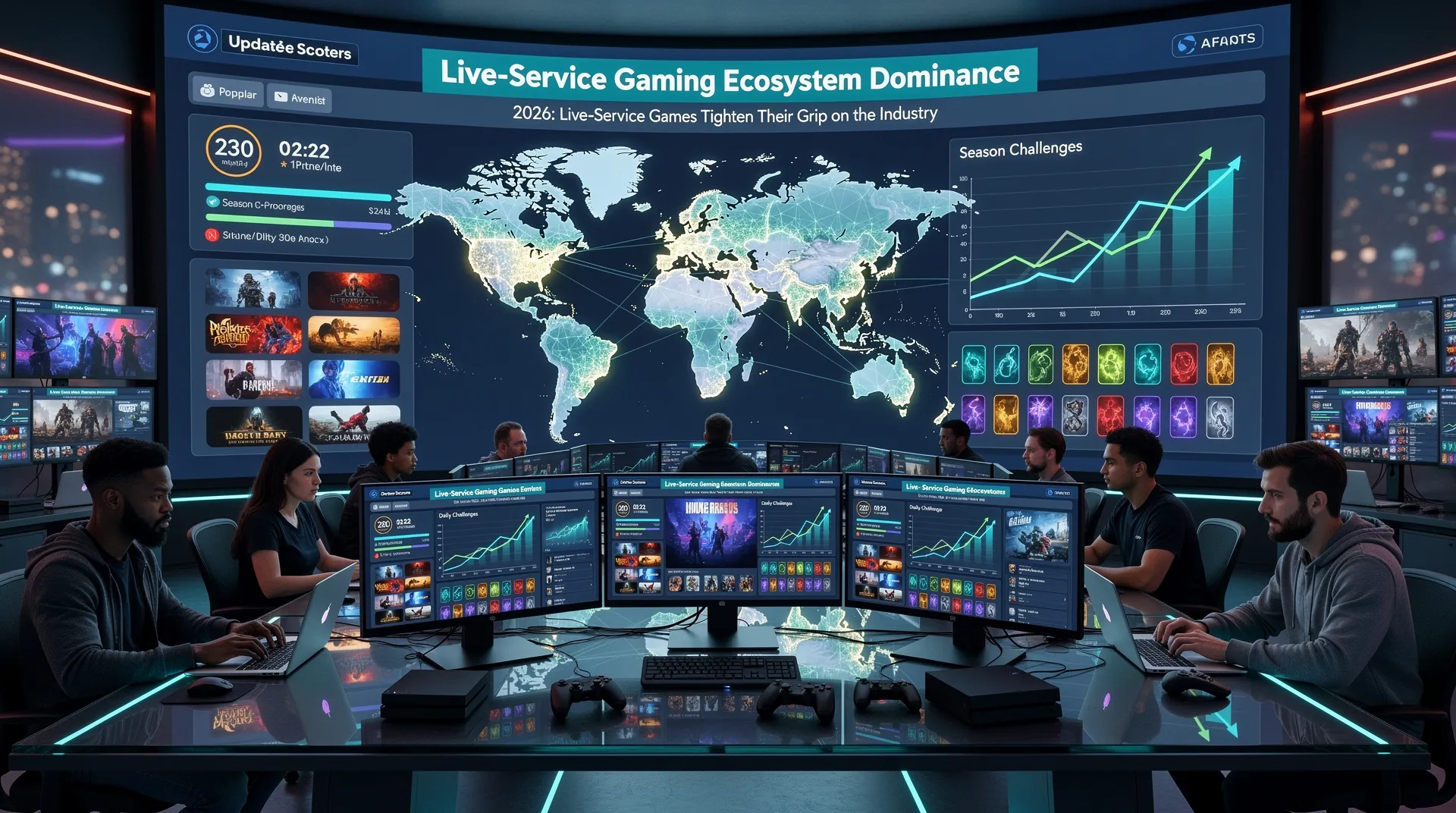
The gaming landscape is witnessing a seismic shift as live-service ecosystems continue their relentless march toward market dominance. Gaming industry trends are now being propelled by real, quantifiable data: player behavior, the time spent, and expenditure, with analytics becoming an important tool for developers to maintain player engagement across months and years rather than weeks.
PUBG continues to evolve in 2026 with major updates including gameplay balancing, new weapons, and ranked system improvements, with the esports roadmap also including multiple global tournaments with increased prize pools and seasonal competitive formats. Similarly, Fortnite continues to expand its metaverse experience with Unreal Engine improvements, creative mode upgrades, and crossover events, with players now experiencing more immersive environments and advanced physics systems. Call of Duty maintains its position through regular seasonal refreshes and competitive improvements that keep the esports community highly engaged.
However, this dominance comes at a cost. As we move into 2026, many live-service titles from 2025 are already struggling, with 15 of 19 examined games losing between 80-99 percent of their players since launch. The contrast is stark between established titans and newcomers attempting to crack the market.
This predictability is influencing most of the game industry trends today, particularly in live-service games. Yet reward loops, limited-time events, and progression systems are all contributory to keeping players returning daily to these gaming ecosystems.
The question remains: can the industry sustain this model when competition intensifies and player attention becomes increasingly fragmented? What does this mean for the future of single-player experiences?